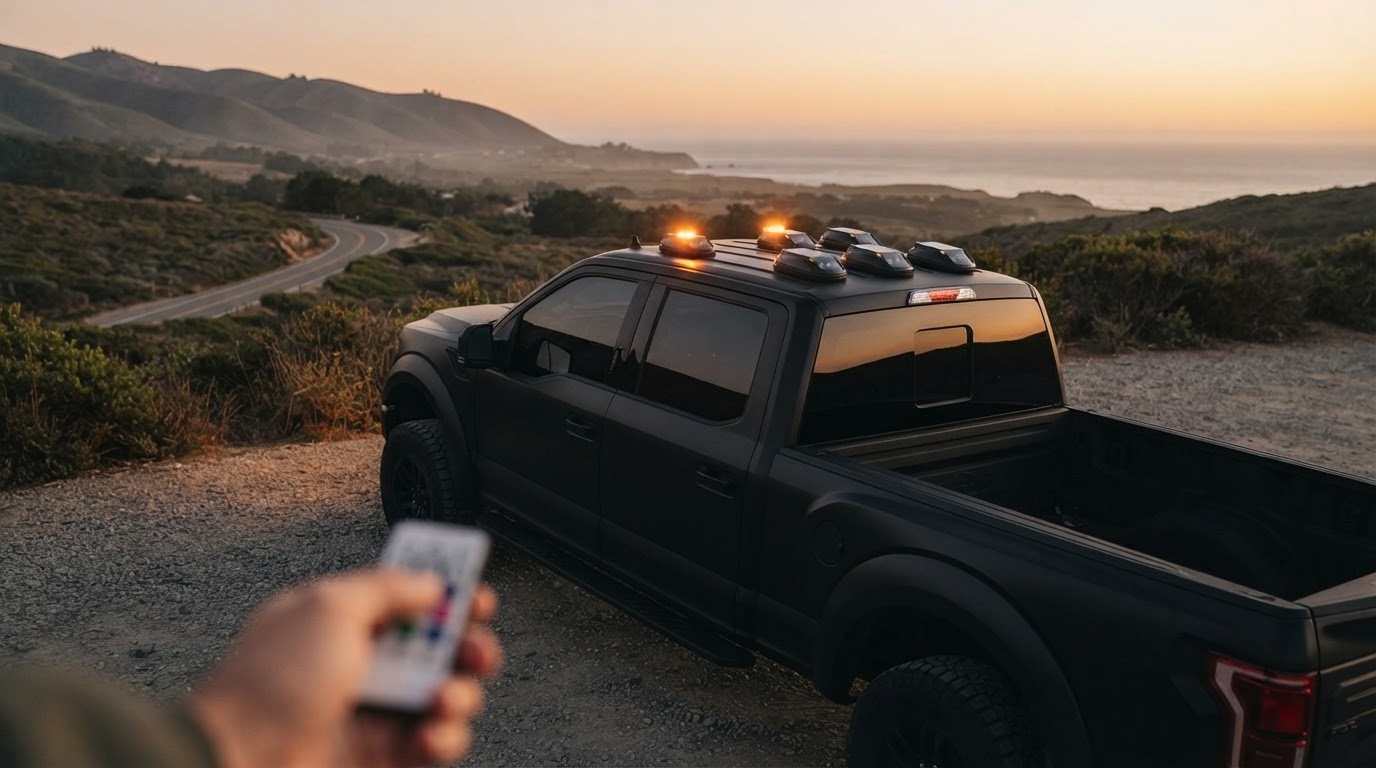
Solar Car Roof Light Reliability for Emergency Truck Use
 Daniel OkaforField Tester
October 25, 2026 — The shift toward wireless emergency lighting has accelerated as fleet operators move away from invasive drilling, putting the Solar Car Roof Light at the center of the conversation for rapid-deployment safety.
I spent the last month evaluating how these self-contained units handle the vibrations and environmental exposure common in heavy-duty truck operations. While traditional manufacturers like Xprite provide rooftop emergency strobe lights designed to draw attention to vehicles through hardwired connections, the logistical freedom of a solar-integrated system changes the installation math for independent contractors. I tested this for three weeks on a service truck to see if the internal battery could actually sustain the high-intensity discharge required for emergency visibility without a physical tether to the alternator.
The Professional Deployment Standard
When evaluating a Solar Car Roof Light for emergency use, the hardware must meet specific criteria for intensity and adhesion. My field testing focused on the magnetic base stability during highway speeds and the charge retention during consecutive overcast days. What surprised me: the unit maintained a consistent flash pattern even after forty-eight hours without direct sunlight, a result of the high-efficiency photovoltaic cells that differ significantly from the passive charging seen in consumer-grade cabin lights. For truck roof applications, the solar car roof light must provide 360-degree visibility, often utilizing a multi-diode array that mimics the 64-LED density found in wired alternatives like the ASPL 17-inch strobe bars. During my evaluation, day three is where I noticed the benefit of the wireless design; I was able to reposition the light to the rear tailgate in seconds to provide localized warning during an off-loading sequence, a maneuver that is impossible with fixed-wire systems. The internal power management system is calibrated to prioritize the strobe pulse over auxiliary functions, ensuring that the primary warning signal remains active even as the battery levels dip. I found that the magnetic mounting force exceeded 20 pounds of pull, which kept the unit stationary during a heavy storm on the interstate, though I would recommend a secondary tether for long-haul routes.
Expert tip: Always clean the mounting surface with isopropyl alcohol before placing the magnetic base, as road grime can reduce the friction coefficient and lead to minor shifting during high-speed transit.
Integrating these units into a broader safety strategy requires understanding the difference between a dedicated solar vehicle warning light and general off-road solar auxiliary roof lights. If I were starting over, I would opt for a dual-unit setup to ensure balanced visibility on both the cab and the trailer. These systems are increasingly popular for those searching for a wireless solar taxi light for car roof or a solar car roof light that functions as a [solar powered car anti-theft light](/blog/emergency-solar-strobe-light-truck-roof) during downtime.
Sources
- Mini Emergency Light Bars | Strobe Lights - Xprite
- Strobes N' More: LED Emergency Vehicle Lights & Accessories
- ASPL 64LED 17" Roof Top Strobe Lights: Unboxing & Install - YouTube