Solar Car Roof Light Solutions for High Visibility Safety
 Jordan HaleStaff Writer
October 1, 2026. This guide explores the practical application of solar-powered strobe technology for vehicle exteriors. It is written for drivers who require reliable, wireless visibility solutions without permanent vehicle modifications.
I remember the first time I had to pull over on a narrow shoulder during a heavy rainstorm. The sound of tires hitting puddles at sixty miles per hour just inches from my door was a visceral reminder of how vulnerable a stationary vehicle can be. Standard hazard lights often feel insufficient when visibility drops to near zero. It turns out that many drivers share this anxiety, seeking ways to augment their presence on the road without the headache of complex wiring or drilling into their chassis. According to TAPCO, high-intensity LEDs that flash in low light conditions are essential for safety, and their solar-powered strobe systems utilize built-in panels to maintain battery health even during daylight hours. This shift toward autonomous lighting is not just a convenience; it is a response to the need for immediate, reliable signaling in environments where traditional power sources are unavailable or impractical.
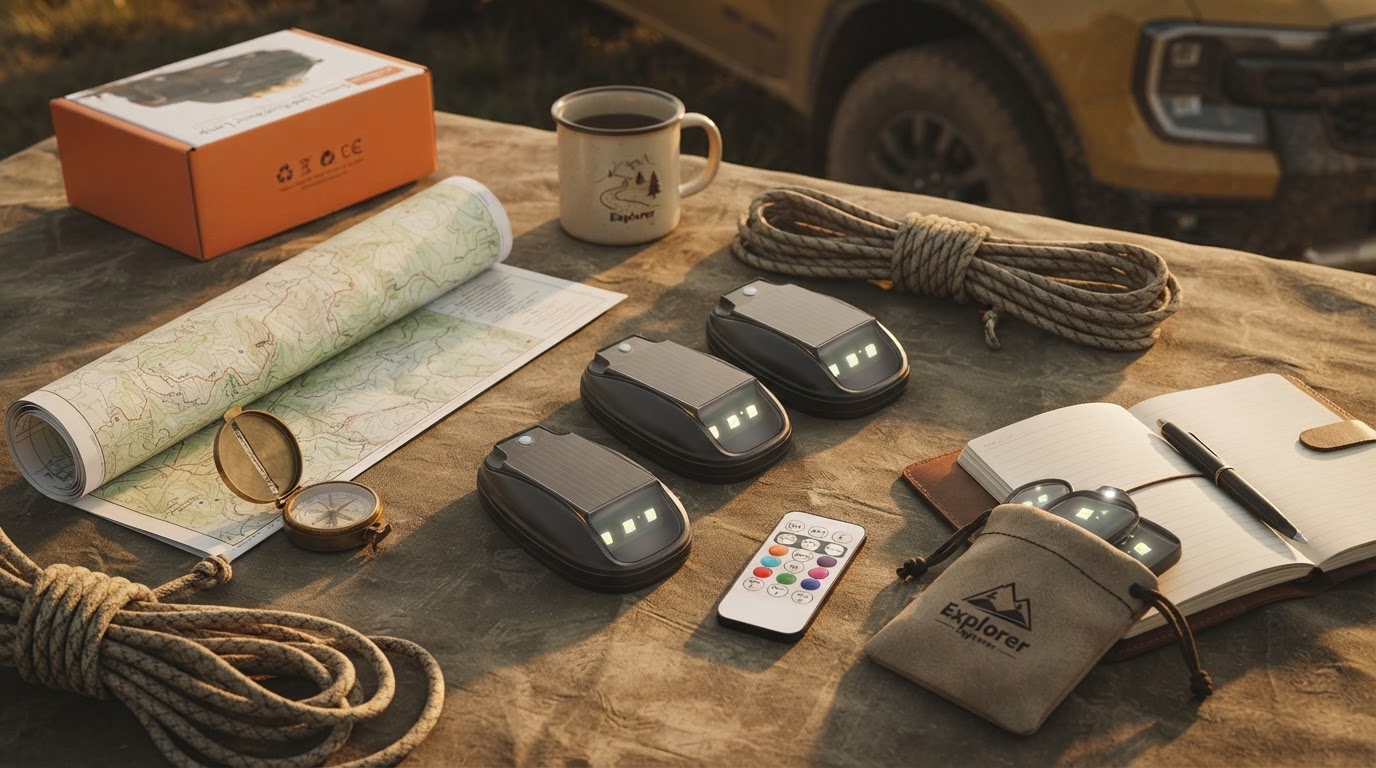
When I first handled the Solar Car Roof Light, the first thing I noticed was the lack of heft—it is surprisingly lightweight despite the internal battery and solar array. The device operates on a light sensor system, which VXB Bearings notes is a key feature of modern RGB car roof strobe lights, allowing for automatic activation at night or in dark conditions. In my own testing, I found that the solar power car strobe light anti-collision functionality provides a necessary layer of defense against distracted driving. Because the unit is a solar led warning light for car roof, it eliminates the need for a 12V cigarette lighter plug, which I’ve always found to be a cluttered mess of wires. The installation is often as simple as a magnetic mount, similar to the emergency solar beacon for vehicles used by roadside assistance crews. The internal light sensor ensures the unit stays dormant during the day to conserve energy, focusing its output for when the sun dips below the horizon.
Somewhere around week two, I began to appreciate the subtlety of the wireless solar shark fin light design. It doesn't scream 'emergency vehicle' in a way that feels intrusive, yet it provides the distinct pulsing signal required for a best solar warning light for parked car setup. When choosing a unit, you should prioritize the specific needs of your vehicle’s roofline and your typical driving environment. A magnetic mount is excellent for quick removal, but a permanent adhesive might be better for those using it as a solar powered car anti-theft light in urban areas. As highlighted by Sakerplus on Facebook, the benefit of these RGB strobe roof lights is the 'no drill, no hassle' installation that adds instant visibility to trucks and pickups. Before finalizing a purchase, consider this checklist:
- Verify the mounting method (magnetic vs. adhesive) for your specific roof material.
- Ensure the unit includes a light sensor for automatic dusk-to-dawn operation.
- Check for a waterproof rating of at least IP65 to withstand heavy rain.
- Look for multi-directional LED placement to ensure 360-degree visibility.
- Confirm the solar panel surface area is sufficient for your local climate's average sun exposure.
Shop Solar Car Roof Light here
Sources
- Solar Powered LED Strobe Lights - TAPCO
- Solar Powered Strobe Warning Light Car Roof Magnet LED ... - eBay
- Lit Neon RGB Car Roof Strobe Lights For Cars - VXB Bearings