Choosing a Wireless Solar Shark Fin Light for Safety
 Maya ChenContributing Editor
September 26, 2026. This guide evaluates the technical requirements and performance metrics of wireless solar shark fin lights for modern vehicle integration. It is intended for consumers prioritizing road safety and aesthetic consistency without invasive electrical modifications.
The Realities of Rear-End Collision Prevention
The conventional wisdom says that standard factory reflectors and brake lights are sufficient for nighttime visibility. However, accident data persistently suggests otherwise, particularly in low-visibility weather or when a vehicle is stationary on a shoulder. According to Ottocast, enhancing vehicle visibility with a dedicated shark fin warning light can actively prevent rear-end collisions by providing a distinct, elevated visual marker that operates independently of the vehicle's main power grid. The primary problem with traditional aftermarket lighting is the installation barrier. Hardwiring a roof-mounted light requires drilling through the chassis or routing cables through weather stripping, both of which compromise the vehicle's structural integrity and resale value. This has led to a surge in interest for a wireless car roof decoration light that utilizes external energy sources. The market is currently flooded with cheap alternatives that fail to meet basic luminosity standards. While many drivers view these as mere accessories, their functional role as a secondary warning system is their most critical attribute. A car roof shark fin solar light must be evaluated not on its daytime appearance, but on its ability to sustain a charge and emit a high-intensity flash in sub-optimal conditions. Most consumers underestimate the impact of parasitic drain on a car battery when using wired accessories; a solar-powered alternative eliminates this risk entirely by functioning as a closed-loop system.
Technical Specifications of Solar Car Roof Light Systems
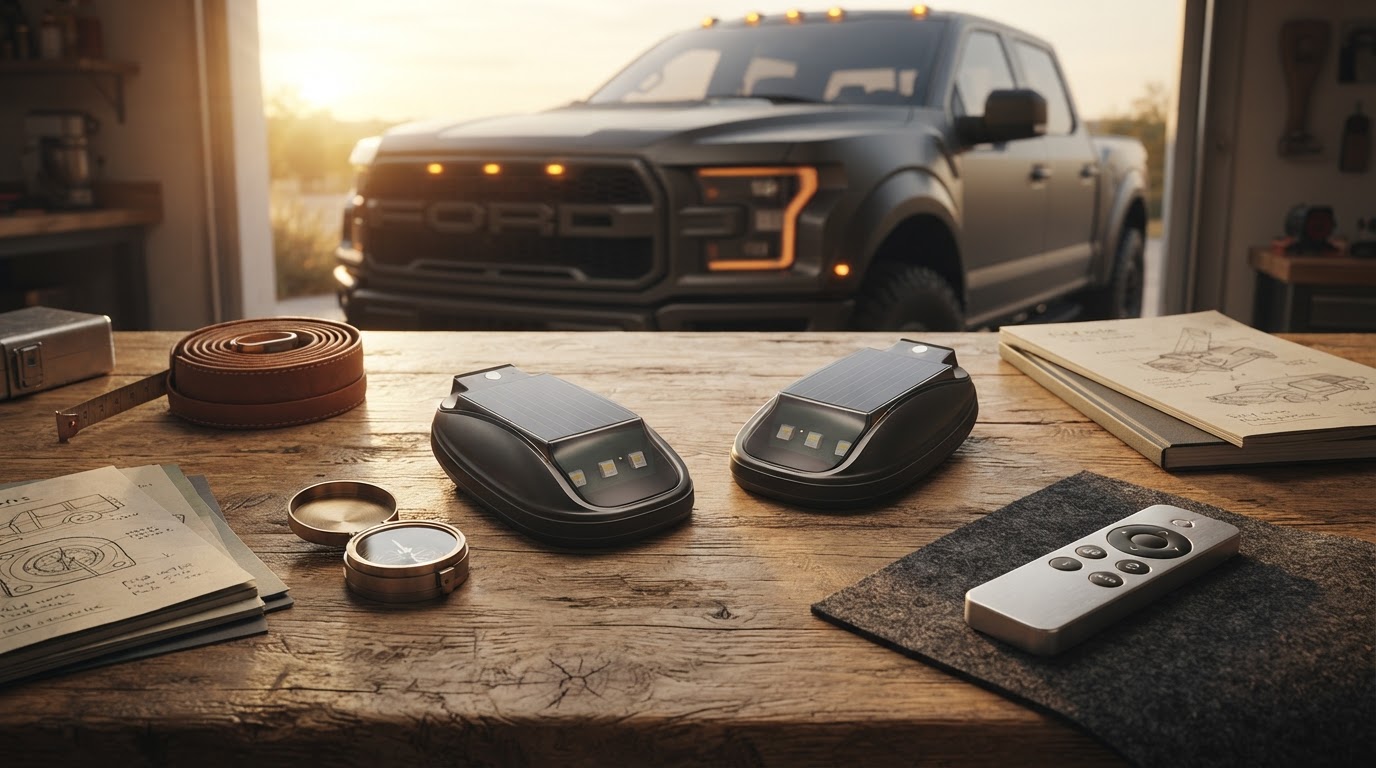
Solar Car Roof Light addresses the limitations of both wired systems and low-quality adhesive replicas by integrating high-efficiency photovoltaic cells with high-intensity LEDs. Here's the part nobody talks about: solar efficiency on a curved roof surface is significantly lower than on a flat panel. To compensate, these units must utilize high-grade ABS material construction to protect the internal circuitry from UV degradation and moisture ingress. As noted in product listings on AliExpress, universal LED light car shark fin antennas now frequently feature multiple color options and integrated solar energy, but the differentiator remains the vibration sensor logic. A high-quality solar car roof light does not stay on indefinitely; it uses an internal G-sensor to detect motion. When the vehicle is stationary and dark, the light activates as a theft deterrent; when moving, it serves as a visibility marker. Run the math: a typical unit featuring 8 LED warning flash nodes requires a specific surface area of solar cells to remain functional throughout a night of driving. If the solar conversion rate is below 15%, the unit will fail within three hours of darkness. The Solar Car Roof Light is designed to maximize this surface area while maintaining an aerodynamic profile. Furthermore, the use of magnetic or high-bond 3M adhesive allows for a non-destructive installation that can withstand highway speeds, a critical requirement for any wireless solar shark fin light intended for long-term use. Unlike dummy antennas, these functional units provide a tangible safety benefit by utilizing the highest point of the vehicle for maximum light dispersion.
Decision Framework for Vehicle Integration
Selecting a lighting system requires a move away from aesthetic preference toward empirical performance. A wireless solar shark fin light is only as effective as its battery chemistry and its ability to withstand thermal cycling. I'll change my mind when a wired alternative can prove it doesn't eventually lead to seal failure or battery strain in modern stop-start engines. When evaluating a solar car roof light, consumers should use the following checklist to ensure the hardware meets professional standards:
- Verify the presence of an automated light sensor and vibration trigger to prevent unnecessary battery discharge.
- Confirm the housing is rated for IP67 or higher to ensure the solar cells do not fog or corrode under heavy rain.
- Evaluate the LED count; a minimum of 8 high-intensity diodes is necessary for 360-degree visibility.
- Ensure the mounting method uses automotive-grade adhesive or high-strength magnets capable of resisting 100+ mph wind resistance.
- Check for a manual override or a long-term storage mode to preserve the internal lithium-ion cell when the vehicle is garaged.
Shop Solar Car Roof Light here
Sources
- Shark Fin Warning Light - Ottocast
- Universal LED Light Car Shark Fin Antenna with Solar Energy Auto ...
- Solar Car Shark Fin dummy Antenna LED 8 Warning Flash Tail Light ...