Solar Car Roof Light Utility for Off-Road Navigation
 Maya ChenContributing Editor
October 23, 2026. This evaluation analyzes the transition from hardwired auxiliary systems to self-contained solar car roof light units for off-road environments. It is intended for overlanders and utility vehicle operators who require perimeter illumination without the parasitic draw or mechanical failure points of traditional wiring.
The Technical Barriers of Traditional Auxiliary Lighting
The conventional wisdom says that off-road lighting must be a high-wattage, hardwired affair to be effective. Enthusiasts often spend thousands on 50-inch light bars and high-output pods that necessitate drilling into the vehicle’s body and tapping into the main electrical bus. According to Expedition Portal, LED auxiliary lights generally come in two types: pods and bars, with pods serving as compact, low-wattage solutions for camp or scene lighting. However, the part nobody talks about is the cumulative risk of electrical fires and battery drainage inherent in these modifications. When a rig is stationary at a remote campsite, the primary battery is a finite resource. Even high-efficiency LEDs can drain a starting battery to the point of ignition failure if left on for extended scene lighting. Furthermore, the complexity of routing wires through a roof rack or drilling through the A-pillar creates permanent ingress points for moisture, leading to rust and short circuits in harsh environments. The industry has long ignored the potential for decentralized power, assuming that if a light isn't drawing 100 watts from the alternator, it isn't functional. This ignores the specific utility of low-intensity perimeter awareness and anti-theft deterrents that operate independently of the vehicle's primary power state.
How Solar Car Roof Light Solves the Wiring Dilemma
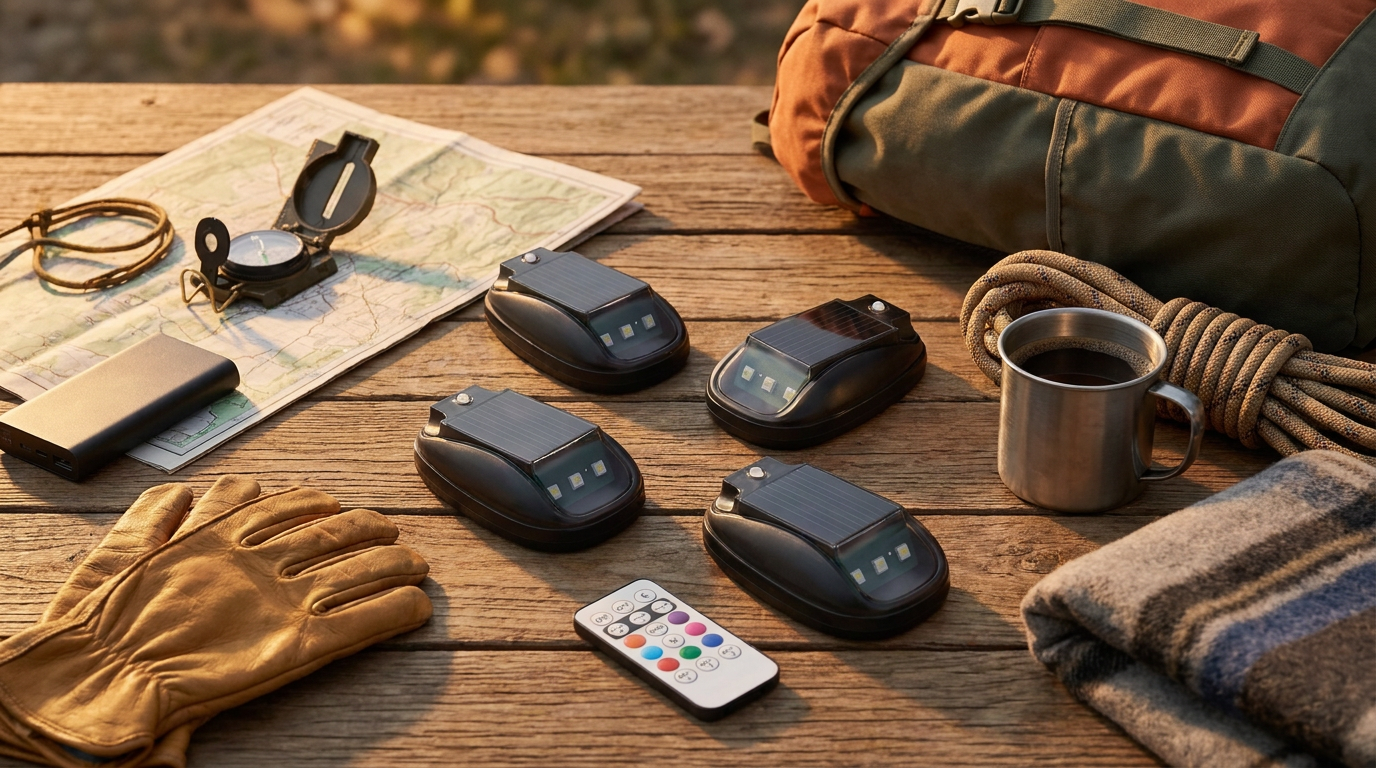
Solar Car Roof Light systems circumvent the most common failure points of off-road illumination by utilizing integrated photovoltaic cells and internal lithium storage. By decoupling the light source from the vehicle’s 12V system, these units provide a fail-safe for visibility that remains operational even if the vehicle’s main battery dies or the alternator fails. Data from Google Search Console indicates a high volume of interest in wireless solar taxi light for car roof and solar powered car anti-theft light applications, suggesting a market shift toward non-invasive mounting. These units utilize high-efficiency solar panels to charge during daylight hours, storing energy for nighttime use. In an off-road context, this translates to a solar car roof light that can function as a beacon or scene light without idling the engine. The integration of magnetic mounts and weather-sealed housings allows for placement on any flat metallic surface, from the roof to the rear quarter panels. This versatility is critical for specialized applications, such as an emergency solar strobe light for truck roof, where temporary high-visibility signaling is required without permanent modification. The technology also addresses the need for a solar vehicle warning light in low-visibility trail conditions, providing a steady or flashing signal to following vehicles. Unlike the $7.95 eBay alternatives that often lack sufficient weatherproofing, a dedicated solar car roof light is engineered to withstand the vibration and thermal cycling typical of trail use. The absence of wires eliminates the most common cause of auxiliary light failure—chafed insulation and corroded connectors—ensuring that the light is available when needed for navigation or perimeter security.
A Framework for Selecting Off-Road Solar Optics
Run the math: a standard hardwired pod light requires approximately 2-4 hours of labor for a professional-grade installation, including relays, fuses, and switches. A solar car roof light requires zero. When evaluating these units for an off-road rig, the criteria must shift from raw lumen output to runtime and mounting integrity. For those utilizing a solar car roof light as a primary anti-theft or location beacon, the internal battery capacity must be sufficient to power the LEDs through three consecutive days of overcast weather. While brands like KC HiLiTES offer specialized BiasBeam technology for aiming light down vehicle sides, solar units provide a similar benefit for static camp setups without the need for a running engine. The selection process should prioritize units that offer multiple modes—steady for scene lighting and flashing for emergency signaling. This dual-purpose functionality is essential for solo travelers who may need a solar vehicle warning light to mark a broken-down vehicle or a emergency solar strobe light for truck roof to signal for assistance in canyons where radio range is limited.
- Mounting Strength: Ensure the magnetic base is rated for at least 60mph or use a permanent adhesive bond for high-speed trail runs.
- Charging Efficiency: Select units with monocrystalline panels for faster energy recovery in partial shade.
- Weather Rating: Look for IP67 or higher to prevent dust ingress during desert travel.
- Mode Versatility: Verify the presence of both constant-on and strobe functions for diverse field needs.
- Battery Chemistry: Lithium-ion or LiFePO4 cells are preferred for longevity in extreme temperature fluctuations.
Shop Solar Car Roof Light here
Sources
- Off Road Lights - KC HiLiTES
- LED Wireless Solar Powered Cab Lights Top Roof Light For Off ... - eBay
- LED Auxiliary Lights & Pods for Off-Road - Baja Designs