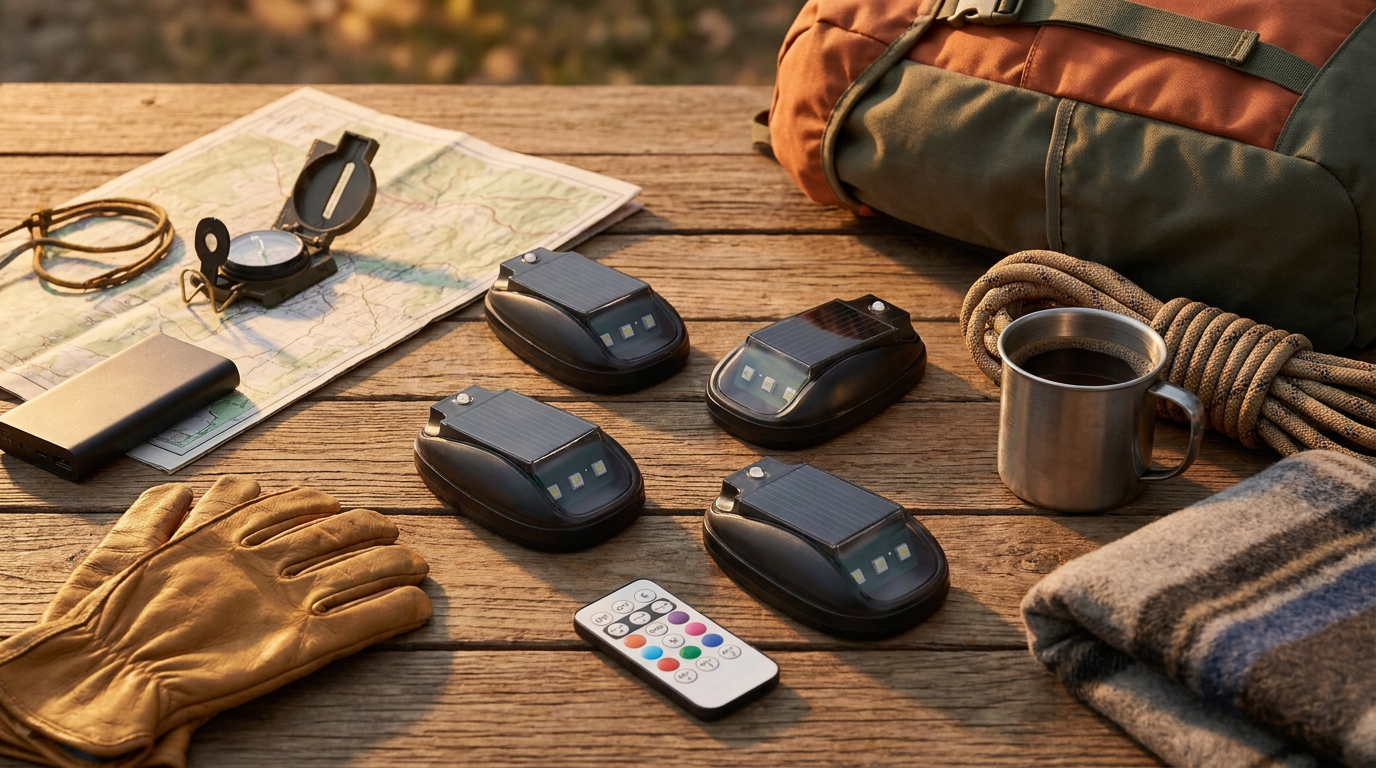
Solar Car Roof Light Utility for Off-Road Lighting
 Daniel OkaforField Tester
August 21, 2026. This assessment examines the practical application of the Solar Car Roof Light for off-road and auxiliary vehicle lighting. It is written for owners of trucks and overland rigs who require additional illumination without the complexity of traditional wiring.
The Challenge of Wiring Remote Off-Road Lighting
I have spent years rigging trucks for backcountry travel, and the primary hurdle is always the wiring loom. Drilling through a perfectly good roof to run power for auxiliary lights is a commitment most drivers hesitate to make. Traditional lighting solutions, like those found at KC HiLiTES, offer incredible output but require specific vehicle mounts and kits that can be labor-intensive to install. I tested this for a two-week stint in the high desert, where I needed reliable perimeter lighting for my campsite that didn't involve draining my primary starter battery. The issue with standard 12V systems is the constant parasitic draw; if you leave a light on while the engine is off, you risk a dead battery in the middle of nowhere.
Day three is where I noticed the real benefit of moving away from hardwired systems. I was parked in a valley with no cell service, and the simplicity of a self-contained unit became apparent. Many off-roaders are looking for ways to add visibility without the permanent modifications. In community discussions regarding outdoor lighting options for roof racks, the recurring theme is the balance between brightness and ease of installation. While some users have experimented with DIY solar cab lights, the lack of durability often leads to failure in heavy rain or vibration. The Solar Car Roof Light addresses this by offering a sealed, wireless alternative that bypasses the need for a secondary battery isolator or complex switch panel inside the cab.
Performance and Field Observations of the Solar Car Roof Light
Photo by Kadir Akman on Pexels
What surprised me during testing was the resilience of the adhesive and magnetic mounting options. When navigating tight trails with low-hanging branches, a standard light bar often acts as a snag point. Because the Solar Car Roof Light has a low-profile, shark-fin style design, it presents a much smaller target for brush. I focused my testing on the universal solar car flash light and strobe functions, which are critical for visibility in dusty conditions. When traveling in a convoy, the dust kicked up by the lead vehicle can make the trailing truck nearly invisible. By using the strobe mode on the roof, I was able to maintain a visual link with the rest of the group without the glare of high-intensity white lights reflecting off the dust cloud.
During the testing period, I also integrated other components of the system. For instance, I found that rgb solar exterior car accents helped identify my vehicle’s perimeter in a crowded camp, while a dedicated off road solar light bar for truck provided the forward throw needed for slow-speed crawling. The Solar Car Roof Light served as the perfect mid-range auxiliary light. It functions effectively as a solar anti-theft car warning light when parked in remote trailheads, providing a blinking deterrent that runs entirely on the energy it gathered during the day. The wireless solar strobe light for truck functionality is particularly useful because I could reposition it to the rear or side of the roof rack depending on the specific hazard or campsite layout. It effectively replaces the need for a wireless solar taxi light for car roof, which some drivers try to repurpose for off-road use, but with a much higher build quality suited for vibration.
A Decision Framework for Solar Auxiliary Lighting
Photo by Levent Simsek on Pexels
Here’s the moment it earned its place: I was setting up camp in a downpour and didn't want to mess with my main light bar’s waterproof connectors. I simply reached up, clicked the Solar Car Roof Light into its strobe pattern to signal my location, and focused on my tent. If I were to do anything differently, I would have opted for a multi-unit setup earlier to cover all four corners of the rack. When choosing an auxiliary solar light, you need to evaluate the specific environment you frequent. A magnetic solar strobe light for cars is excellent for temporary use, but for high-speed trail runs, the permanent adhesive backing is the safer bet. You aren't just buying a light; you are buying the freedom from a cluttered dashboard full of aftermarket toggle switches.
Before you commit to a specific lighting setup, consider this checklist to ensure the hardware meets your off-road requirements:
- Mounting Integrity: Ensure the base can withstand sustained vibrations on washboard roads without shifting.
- Charging Efficiency: Verify the solar panel surface area is sufficient to recharge the internal battery within 6-8 hours of daylight.
- Mode Versatility: Look for units that offer both steady-on for area lighting and strobe patterns for emergency signaling.
- Weather Sealing: The unit must have an IP67 rating or higher to survive river crossings and pressure washing.
- Profile Height: Choose a low-profile design to avoid snagging on limbs or impacting garage clearance.
Shop Solar Car Roof Light here