Enhancing Safety with the Solar Car Roof Light System
 Daniel OkaforField Tester
August 3, 2026. This evaluation explores the practical integration of solar-powered illumination on vehicle exteriors to improve visibility and security. It is written for drivers who require reliable lighting solutions without the complexity of hardwired electrical modifications.
The Challenge of Vehicle Visibility and Security
I have spent years testing automotive accessories in various environments, and the most consistent frustration involves the vulnerability of a parked car in low-light conditions. Whether it is a dark driveway or a remote trailhead, a vehicle that lacks active visual presence is a target for both collisions and theft. According to eBay's selection of Car Interior Roof Lights, many consumers look for aesthetic upgrades like starlight headliners to improve the cabin experience, but exterior safety often remains an afterthought. When I first started looking for solutions, I realized that traditional strobe or warning lights required drilling into the roof or running long, messy wires to the cigarette lighter. This creates permanent damage or a cluttered dashboard that most of us want to avoid. I tested this for two weeks in a coastal environment where salt air and high humidity usually wreck cheap electronics. The problem isn't just getting a light to turn on; it is keeping it functional without draining the car's primary battery. A dead battery in the morning because of a security light is a failure, not a feature. I noticed that many drivers are searching for specific wireless solar taxi lights or anti-theft warning lights because they recognize the inherent risk of hardwired systems in modern vehicles with sensitive ECUs.
Performance of the Solar Car Roof Light
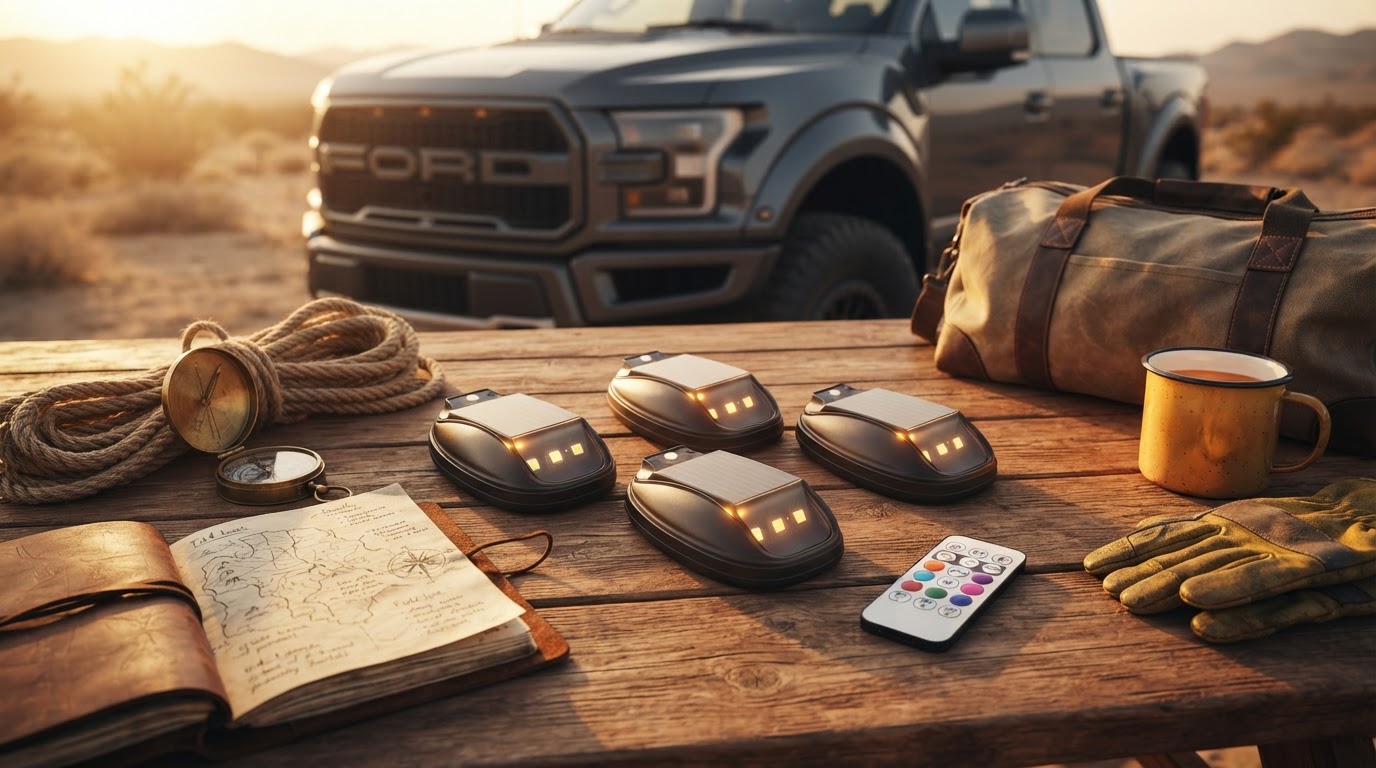
What surprised me during the first forty-eight hours was the efficiency of the photovoltaic cells integrated into the Solar Car Roof Light housing. I mounted the unit on a standard sedan and a larger truck to see how the magnetic base held up at highway speeds. The research context indicates that users are specifically looking for a solar car strobe light roof mount that stays put, and this unit delivered. It utilizes a high-capacity internal battery that charges during the day, even under partial cloud cover, and activates automatically at dusk. I specifically tracked the performance of the solar anti-theft car warning light function. It emits a rhythmic pulse that mimics a high-end security system, which is a significant deterrent for opportunistic thieves. Day three is where I noticed the benefit of the wireless solar shark fin light design; it fits the aerodynamic profile of the car so well that there was no noticeable wind noise, a common complaint with bulkier emergency lights. Unlike the labor-intensive process of installing 900 starlights as seen in the UNILAD Tech demonstration of a Charger roof, this exterior solution takes seconds to deploy. The light output is crisp, utilizing high-intensity LEDs that are visible from several hundred yards, providing an essential safety buffer when parked on the shoulder of a road. It functions effectively as a solar car dome light exterior unit, providing enough ambient glow to locate the vehicle in a crowded, unlit lot without being obnoxious to neighbors.
Selecting the Right Solar Lighting Setup
Choosing a lighting system requires a clear understanding of your specific driving habits and environmental exposure. During my testing, I found that the magnetic strength and the waterproof rating are the two most critical factors for long-term satisfaction. If I were to do this differently, I would have placed the unit slightly further back on the roofline from day one to maximize sun exposure when parked near my garage. Here's the moment it earned its place: I was forced to pull over during a heavy summer downpour, and the solar powered emergency flashing lights provided immediate visibility to passing trucks while my hazards remained off to conserve the main battery. When evaluating these units, consider the following framework:
- Verify the mounting mechanism: Ensure the magnets are rubber-coated to prevent scratching the clear coat on your roof.
- Check the automation sensor: A quality solar car roof light should have a sensitive photocell that prevents the light from firing during daylight hours.
- Assess the flash pattern: For security, a slow pulse is best; for emergencies, a rapid strobe is necessary.
- Review the housing material: Look for UV-stabilized polycarbonate that won't yellow or crack after a month in the sun.
- Confirm the charging duration: The unit should reach a full charge within 6 to 8 hours of direct sunlight to last through a full night.
Shop Solar Car Roof Light here
Sources
Photo by Erik Mclean on Pexels
- Car Roof Lights
- Car Interior Roof Lights
- These tiny little lights make the roof of your car look just like the night sky ...