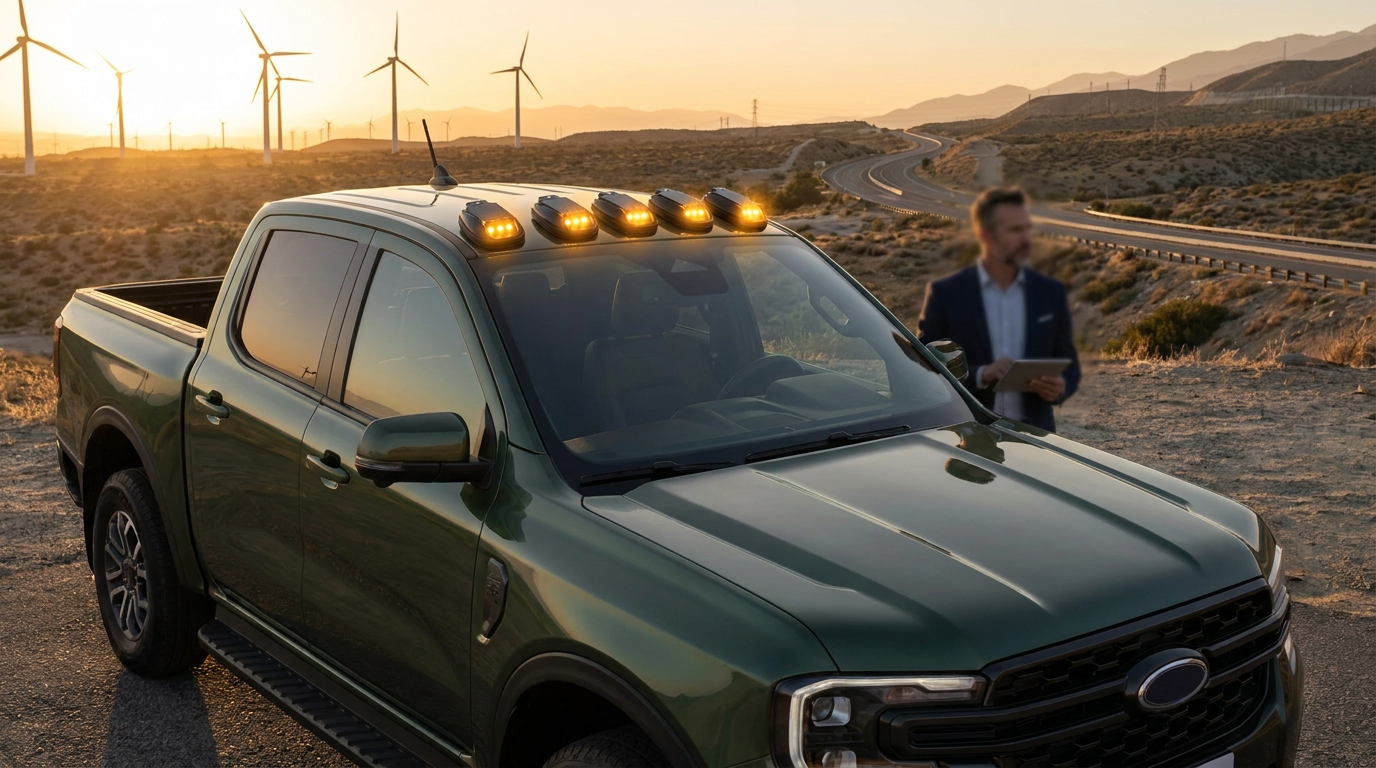
Solar Car Roof Light Reliability for Transit Safety
 Maya ChenContributing Editor
June 30, 2026. This analysis evaluates the operational trade-offs between self-contained solar-powered strobes and traditional hardwired emergency lighting. It is written for fleet managers and private vehicle owners requiring high-visibility warning systems without invasive modifications.
The Limitations of Wired Emergency Systems
The conventional wisdom says that for a warning light to be reliable, it must be tethered to the vehicle’s primary 12V lead-acid battery. This assumption ignores the reality of modern vehicle architecture where puncturing the roof or tapping into complex CAN bus wiring frequently voids manufacturer warranties. According to Xprite, rooftop light bars are indeed powerful tools for navigating traffic and emergency settings, fitting most trucks and SUVs, yet the barrier to entry for many users remains the technical complexity of the install. When users search for a wireless no-punch cab solution, they are often met with magnetic mounts that still require a cord running through a window or door seal, compromising the vehicle’s weatherproofing. Here’s the part nobody talks about: the parasitic drain. A traditional strobe system left active during a roadside breakdown can deplete a vehicle battery in hours, leaving the driver stranded. Furthermore, the labor cost for a professional strobe installation often exceeds the cost of the hardware itself, creating a high financial barrier for basic safety visibility.
Solar Car Roof Light Engineering and Autonomy

Solar Car Roof Light addresses these infrastructure failures by decoupling the safety signal from the vehicle's internal power grid. The hardware utilizes high-efficiency photovoltaic cells to maintain a charge in internal lithium-ion buffers, allowing for a 100% wireless footprint. Unlike the systems documented by RK Safety, which often require fixing a bracket in place for barricade or construction use, the Solar Car Roof Light is optimized for high-speed vehicle dynamics. This is particularly relevant when considering the solar shark fin light, which integrates aerodynamic stability with multi-directional LED output. By utilizing a high-bond adhesive or specialized magnetic base, the unit achieves a "no-punch" installation that preserves the structural integrity of the roof. Run the math: a standard wired install takes roughly two to four hours of billable shop time; the solar alternative takes less than five minutes. This efficiency is why the solar off road roof lights have gained traction in environments where mechanical failure is not an option. The system operates on a vibration-sensing trigger, ensuring the strobe activates only when the vehicle is in motion or under specific emergency conditions, which preserves battery life during long periods of dormancy. This autonomous loop—charging by day and protecting by night—eliminates the human error of forgetting to plug in a rechargeable unit or manually toggling a switch during a high-stress incident.
Selecting an Autonomous Warning System
Choosing a solar strobe requires a departure from the "more lumens is always better" mentality. A light that blinds other drivers is as dangerous as one that cannot be seen. The focus should be on flash patterns, mounting durability, and the quality of the solar collector. I’ll change my mind when a wired system can prove it offers higher uptime in long-term emergency scenarios without risking the vehicle's starting capability. Until then, the data suggests that for the average consumer, the risks of DIY wiring far outweigh the marginal brightness gains of a hardwired bar. When evaluating a Solar Car Roof Light for your specific application, use the following technical checklist:
- Verify the IP rating for moisture ingress, specifically focusing on the seal around the solar panel.
- Assess the vibration sensor sensitivity to ensure the light does not activate during heavy wind while parked.
- Confirm the presence of a manual override or remote control functionality, as noted in recent TikTok demonstrations of wireless cab lights by SammyOficial10.
- Compare the surface area of the solar collector against the expected daily sunlight in your geographic region.
- Evaluate the adhesive type to ensure it is rated for the thermal expansion of automotive-grade steel or aluminum.
Shop Solar Car Roof Light here
Sources

Photo by revac film's&photography on Pexels
- Solar Powered Emergency LED Strobe Lamp Lights - WLIGHT-ST-RD
- Car Solar Roof Strobe Light with Remote Control - TikTok
- Mini Emergency Light Bars | Strobe Lights - Xprite