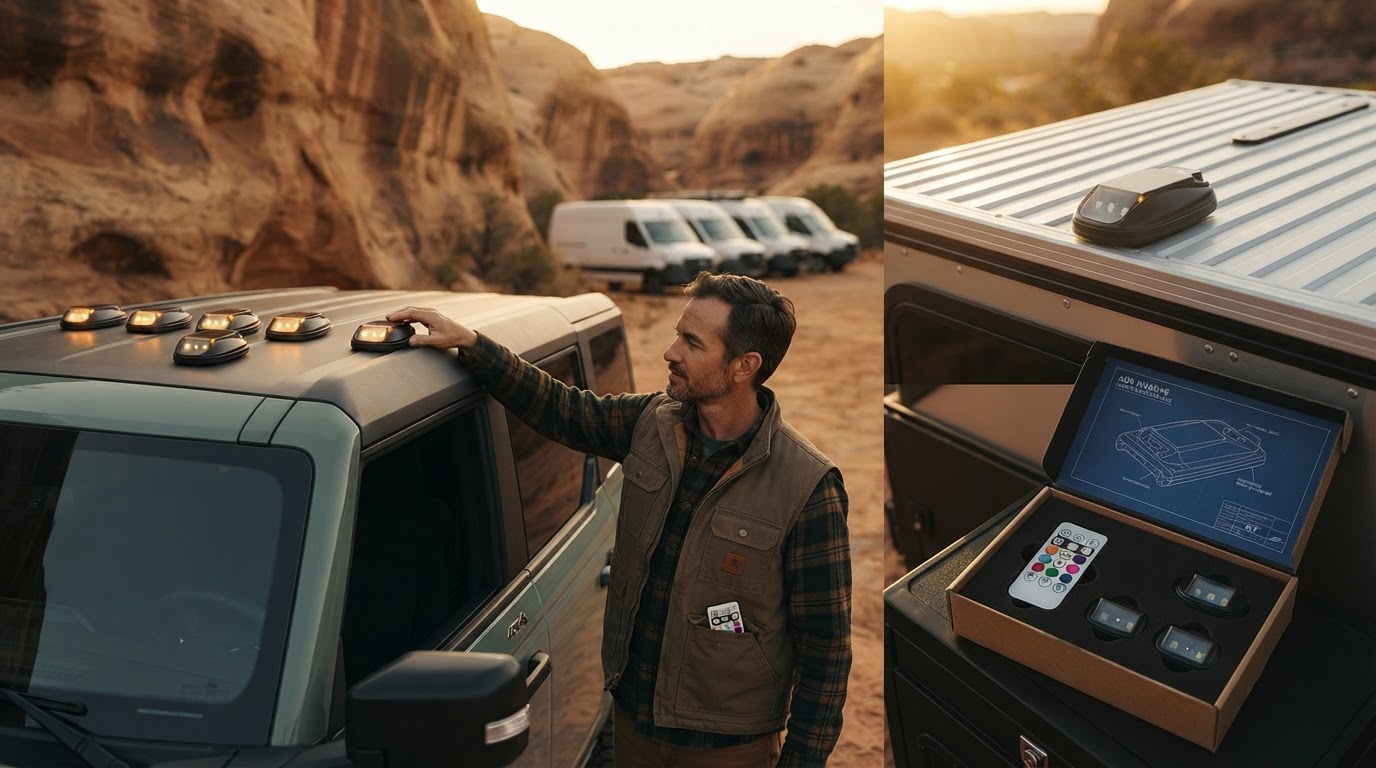
Solar Car Roof Light Performance for Modern Vehicle Safety
 Maya ChenContributing Editor
August 17, 2026. This analysis evaluates the transition from wired to solar-powered vehicle lighting systems for commercial and private transport. It is intended for fleet managers and vehicle owners prioritizing non-invasive installation over traditional hardwired configurations.
The Limitations of Hardwired Roof Infrastructure
The conventional wisdom says that a permanent, hardwired connection is the only way to ensure 100% reliability for vehicle auxiliary lighting. This perspective ignores the significant structural risks and long-term depreciation costs associated with drilling into a vehicle's chassis. According to Cab Over America, the emergence of wireless cab running lights for trucks, SUVs, and Jeeps has effectively eliminated the need for holes and wires, allowing for a 5-minute installation that preserves the vehicle's structural integrity. When a technician drills into a roof to install standard clearance lights, they are creating permanent points of failure for moisture ingress and rust. Furthermore, the labor cost for professional wiring often exceeds the cost of the hardware itself. Here's the part nobody talks about: the secondary market value of a truck drops the moment the roof is compromised. For those managing a solar car roof light deployment for trucking, the shift toward wireless systems is less about convenience and more about asset protection. The industry has reached a tipping point where the efficiency of photovoltaic cells can now sustain high-output LEDs without drawing from the vehicle's primary battery, yet many fleet owners remain tethered to 20th-century installation methods that involve stripping headliners and risking electrical shorts.
Technical Specifications of Solar Car Roof Light Systems
Photo by Magda Ehlers on Pexels
Solar Car Roof Light technology addresses these infrastructure failures by utilizing self-contained power units that harvest energy during daylight hours to power high-visibility LED arrays. These units frequently serve dual purposes, functioning as both aesthetic clearance lights and functional safety indicators. Current data from Google Search Console indicates a high volume of interest in solar car anti-theft lights and wireless solar taxi lights for car roofs, suggesting that the consumer market is moving away from complex electrical modifications. A high-end wireless solar strobe light for truck applications must provide consistent lumens even in low-light environments. For example, the White LED LoPro Wireless Solar-Powered Truck Cab Light system by Race Sport Lighting is priced at $569, reflecting a premium on the engineering required to maintain a low profile while maximizing solar surface area. These systems often include auto-activation sensors, like those found in Night Vibe products, which trigger the lights at dusk without manual intervention. This is particularly relevant when considering a solar car roof light setup for wireless hood strobes, where synchronization between multiple solar units is required to maintain a cohesive safety signal. The integration of high-capacity internal batteries allows these lights to function as an emergency solar beacon for vehicles during nighttime breakdowns, even if the vehicle's main battery has failed completely. By decoupling safety lighting from the alternator, the system provides a redundant layer of visibility that hardwired lights cannot match.
Evaluating Solar Lighting Reliability and Deployment
Run the math: a standard 5-piece cab light installation requires five separate holes and approximately 15 feet of wiring. A solar car roof light requires zero holes and zero wires. The decision to switch to solar-powered roof mounting should be based on a rigorous assessment of the vehicle's operational environment and the specific safety requirements of the region. I’ll change my mind when hardwired systems can prove they don't lead to increased corrosion rates over a five-year lifecycle. Until then, the solar alternative is technically superior for most non-emergency commercial uses. When selecting a system, use the following framework to ensure the hardware meets professional standards:
- Verify the presence of an auto-activation sensor to ensure lights trigger at dusk without driver input.
- Confirm the mounting mechanism—magnetic solar strobe lights for cars offer the highest flexibility for temporary deployments, while adhesive LoPro systems are better for permanent cab clearance.
- Check the IP rating for water resistance; roof-mounted units must withstand high-pressure car washes and extreme weather.
- Assess the solar-to-battery ratio to ensure the unit can maintain a charge during winter months with shorter daylight hours.
- Determine if the unit includes a wireless remote or if it operates strictly on light-sensing technology.
Shop Solar Car Roof Light here
Sources
Photo by Deybson Mallony on Pexels
- Night Vibe Wireless Cab Lights — No Drill, Set of 5
- Solar/Battery LED Wireless Cab Running Lights - Cab Over ...
- White LED Wireless Solar-Powered Truck CAB Light (5- ...