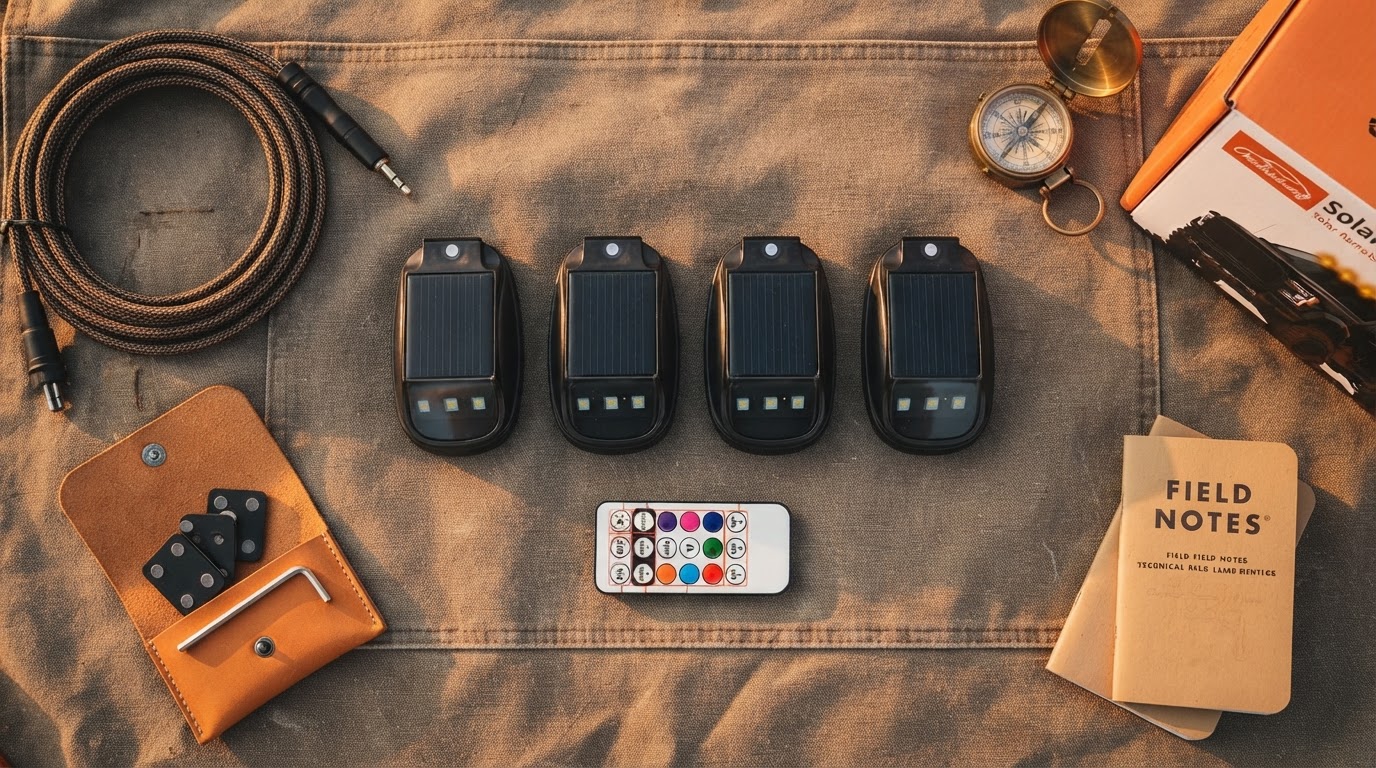
Solar Car Roof Light Deployment for Parked Vehicle Safety
August 1, 2026. This analysis examines the technical requirements and deployment strategies for high-visibility warning systems on stationary vehicles. It is intended for vehicle owners seeking to enhance security and roadside presence without relying on primary battery reserves.
Selecting the appropriate illumination for a stationary vehicle requires balancing visibility with energy conservation. Think of it as a matrix of visibility distance versus power autonomy. When a vehicle is parked in a low-light environment, the primary goal shifts from active navigation to passive signaling. According to LED Light Expert, solar-powered LED systems are increasingly utilized in parking contexts to reduce reliance on purchased electricity and avoid the complexities of long utility runs. For the individual vehicle owner, this translates to a need for self-sustaining units that can operate independently of the car's internal wiring. Two axes matter here: the frequency of the light pulse (strobe vs. steady) and the lux output relative to ambient light. High-frequency pulses are traditionally associated with emergency alerts, whereas steady low-intensity pulses often serve as a deterrent for unauthorized proximity. In the context of car camping or long-term storage, the need for lighting outside the vehicle without drawing from the lead-acid battery is a recurring technical challenge. Discussions within specialized communities, such as those found on Facebook's lighting forums for car camping, emphasize that the best solutions must operate entirely on captured solar energy to prevent stranding the driver. The transition toward wireless solar shark fin lights and magnetic strobe units reflects a broader shift toward modular, non-invasive security hardware that can be deployed or removed based on the parking environment.
The Solar Car Roof Light addresses these specific stationary risks by integrating high-efficiency photovoltaic cells with a multi-directional LED array. Unlike traditional hard-wired systems, the Solar Car Roof Light utilizes a wireless design that eliminates the risk of parasitic drain on the vehicle's starter battery. The device is engineered to capture energy during daylight hours, even in overcast conditions, to power a series of anti-theft and warning signals throughout the night. This is particularly relevant when deploying a solar anti-theft car warning light to discourage potential intruders in unlit residential areas. The hardware is designed for universal application, catering to the 3,500 monthly search queries for solar car roof lights by providing a magnetic or adhesive mount that fits standard sedan, SUV, and truck silhouettes. By utilizing a solar powered anti-theft car light, owners can maintain a persistent security profile without the need for manual activation. The internal circuitry includes a light-sensitive sensor that triggers the LEDs only when ambient light levels drop below a specific threshold, ensuring that stored energy is not wasted during daylight hours. Furthermore, the inclusion of a solar led warning light for car roof functionality provides a secondary layer of safety during emergency roadside stops. The technical specifications prioritize weather resistance, ensuring that the solar panels remain functional despite exposure to rain, snow, or extreme temperature fluctuations. This durability is essential for maintaining a solar powered car anti-theft light system that remains reliable over several years of outdoor exposure. Once you see it this way, the move from integrated vehicle lighting to independent solar modules becomes a logical step in modern vehicle maintenance.
The decision rule: Choose a solar warning light that matches your specific parking duration and typical environmental light levels. A vehicle parked in a high-traffic urban area requires a different signaling intensity than a vehicle left in a remote trailhead parking lot. When evaluating options, prioritize units that offer a high refresh rate on the solar charge to ensure the battery remains topped off during short winter days. It is also beneficial to consider the specific mounting requirements; a solar powered anti-theft car light should be positioned at the highest point of the vehicle to maximize both sun exposure and visibility to others.
Before finalizing a deployment, use the following framework to assess the hardware:
- Luminous Intensity: Ensure the LED output is visible from at least 100 meters in complete darkness.
- Charging Efficiency: Verify the solar panel can reach a full charge within 6-8 hours of indirect sunlight.
- Attachment Security: Select magnetic mounts for temporary use or high-bond adhesives for permanent anti-theft applications.
- Automatic Switching: Confirm the presence of a dusk-to-dawn sensor to automate the lighting cycle.
- Weather Rating: Look for an IP65 or higher rating to protect against moisture ingress.
Shop Solar Car Roof Light here
Sources

Photo by Gabriel Rissi on Pexels
- LED Solar Parking Lot Lights
- 6 Best Solar Parking Lot Light Brands
- What are some good solar lighting options for car camping?