Solar Roof Lights vs. Hardwired Emergency Light Bars
Solar Roof Lights vs. Hardwired Emergency Light Bars
Choosing the right lighting setup for an overland truck or SUV often comes down to installation complexity and battery impact. When deciding between a solar roof light vs hardwired light bar camping setup, off-road enthusiasts must weigh convenience against electrical strain.
Comparing Off-Road Lighting Installations
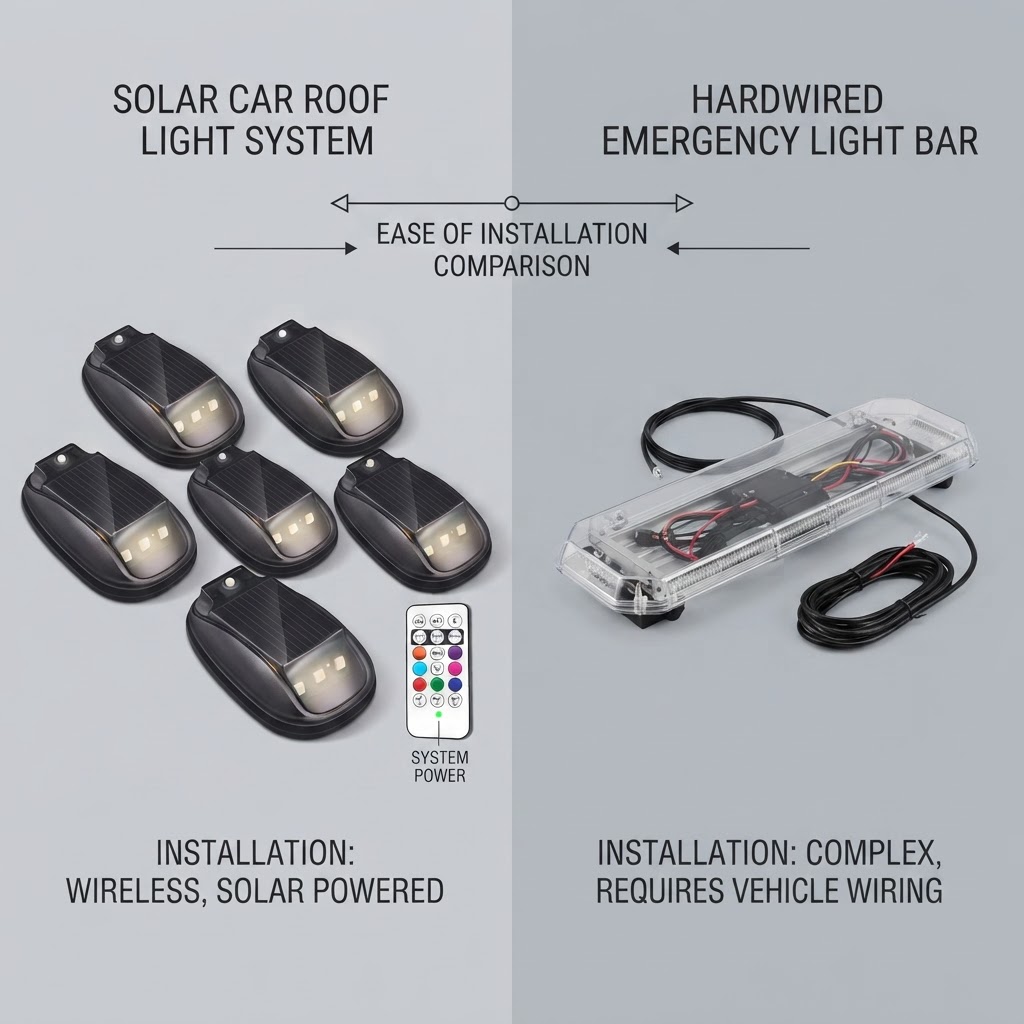
Hardwired light bars require drilling into roof mounts, running heavy-gauge wire down A-pillars, and connecting to auxiliary switches or relay boxes. Labor and mounting hardware can cost 0 USD in installation fees.
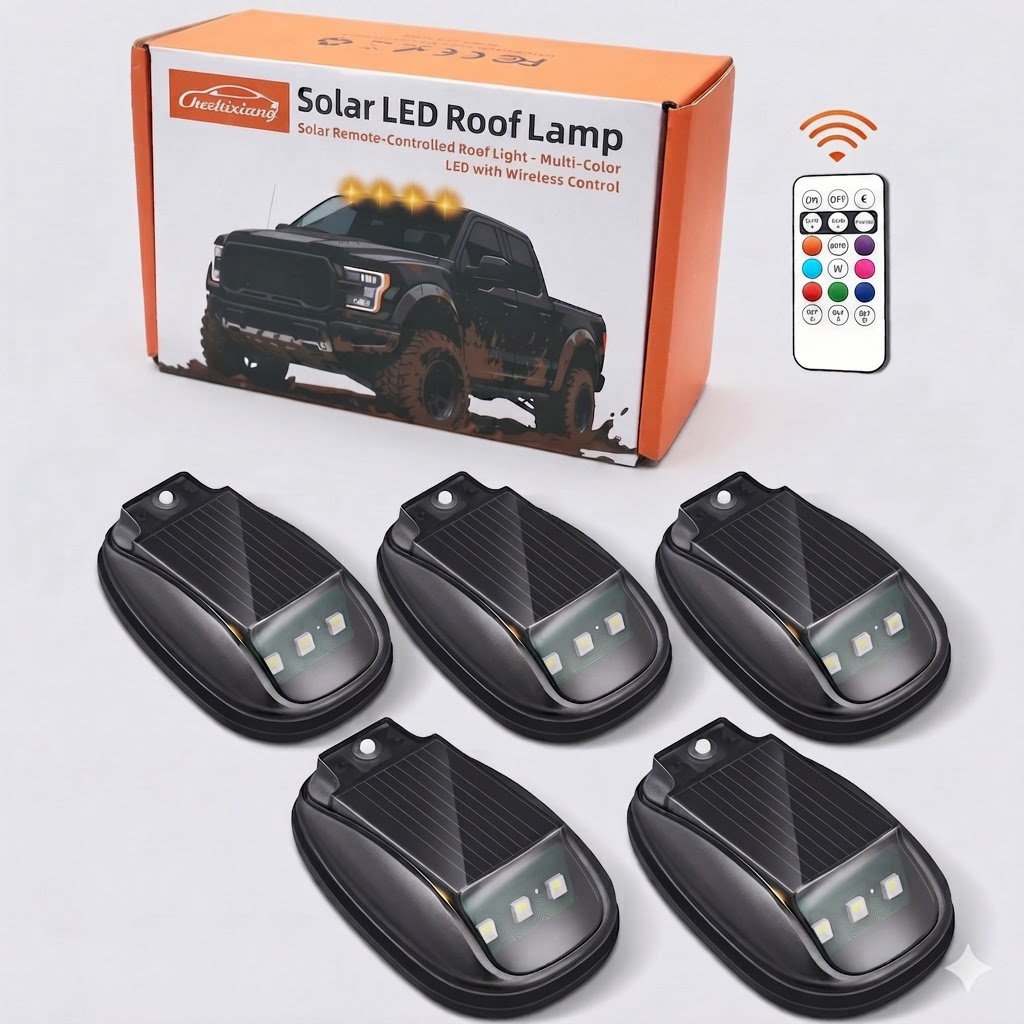
Conversely, low-profile solar lights utilize industrial peel-and-stick adhesive, costing 0 USD in installation fees and requiring no tools or drilling. Application takes moments: simply clean the roof surface, align the light, and hold with adhesive press for 30 seconds.
Power Management and Battery Preservation
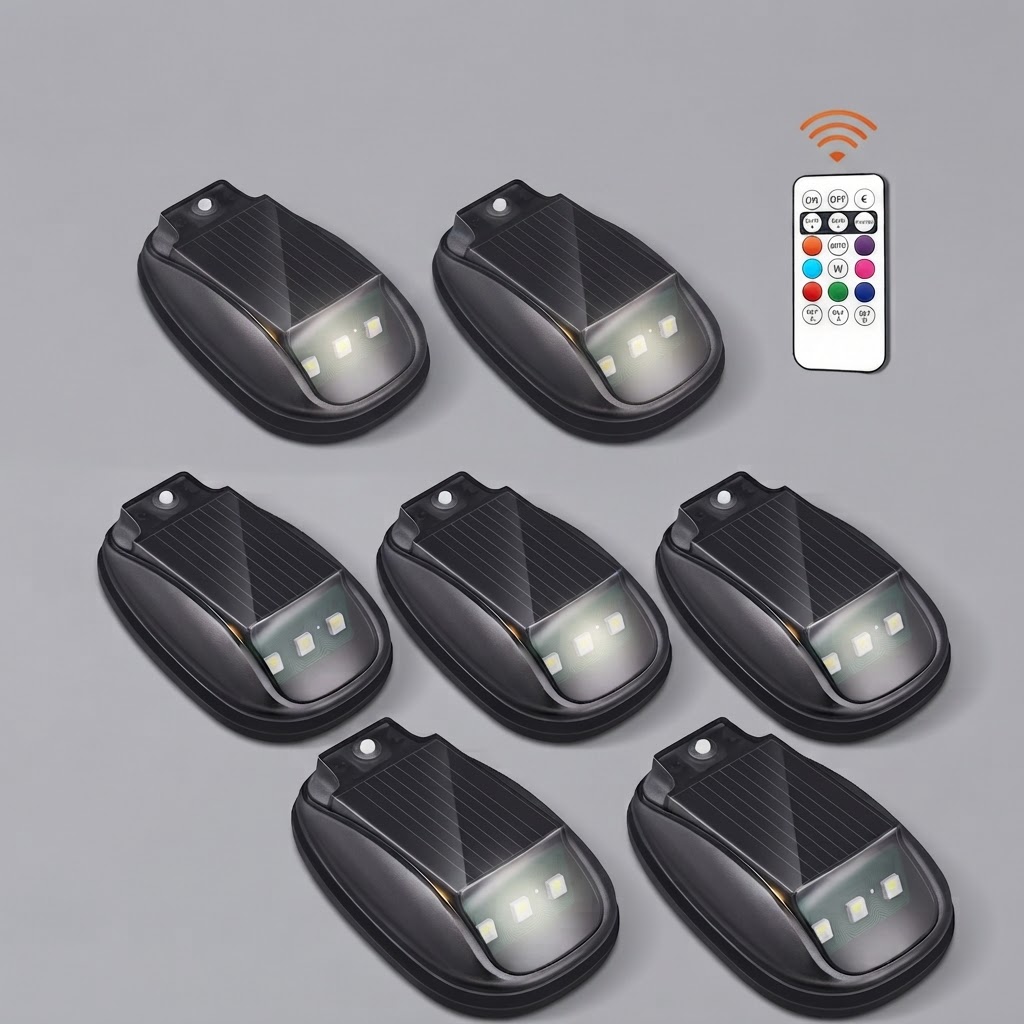
Hardwired bars draw power directly from your starting or house batteries, creating risk during overnight camp stops. A solar cab light features self-sufficient solar charging backed by a Type-C charging port for backup. Providing 100-200 lumens of light for 8-12 hours, it supplies steady illumination without draining vehicle power.
To see how non-invasive solar illumination fits into complete campsite lighting plans, read [the main guide].
Feature Comparison: Solar Cab Light vs Light Bar
- Installation Cost: 0 USD vs 0 USD for hardwired systems.
- Power Source: Built-in high-efficiency solar panel vs Main starter battery.
- Control: Wireless remote control with 8 RGB colors vs Manual cab switches.
- Automation: Smart vibration & light sensing vs Manual toggle switch.