Optimizing Solar Car Roof Light for Off-Road Use
 Jordan HaleStaff Writer
June 16, 2026. This narrative explores the practical integration of solar-powered illumination for vehicles operating in remote, off-road environments. It is written for enthusiasts and professionals who require reliable auxiliary lighting without the complexity of traditional hardwiring.
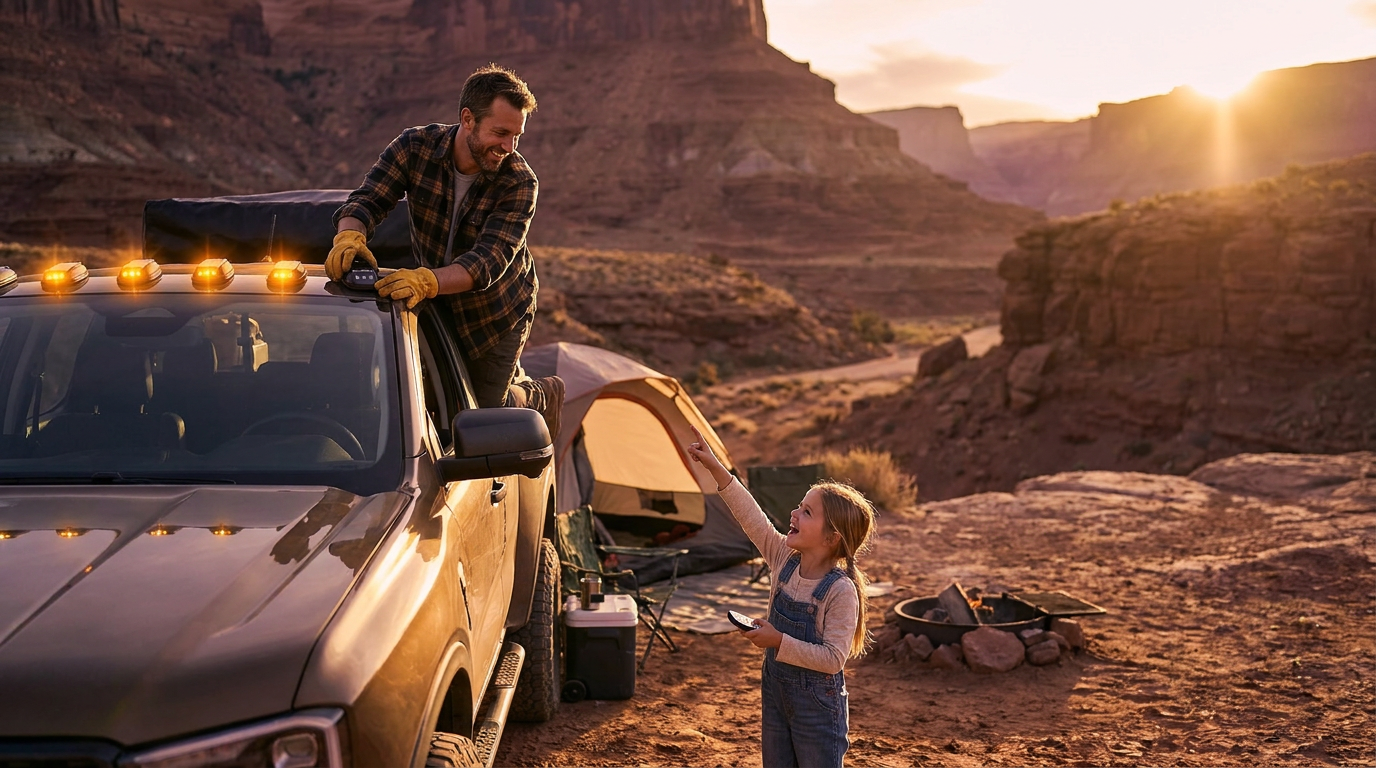
The first thing I noticed was the absolute silence of the mountain ridge, a stark contrast to the rattling of my gear as I navigated the trail. When you are miles from the nearest paved road, the last thing you want to worry about is a battery drain caused by a short in your auxiliary wiring. Traditional off-road lighting often demands invasive drilling into the chassis, creating potential leak points and electrical vulnerabilities. According to Race Sport Inc, the shift toward wireless systems like the LoPro Wireless Solar-Powered CAB LED Light System highlights a growing demand for no-drill, no-hole installations that preserve the integrity of the vehicle's roof. For those of us who have spent hours fishing wires through a headliner only to have a fuse blow in the middle of a night run, the appeal of a self-contained unit is immediate. The weight of a standard light bar and its associated harness can be cumbersome, but the modern solar-powered alternative feels like a streamlined evolution. It turns out that the simplicity of a magnetic or adhesive mount is not just about convenience; it is about reducing the number of failure points in a harsh environment where vibration and moisture are constant threats. This is particularly relevant when considering the Solar Car Roof Light Reliability and Installation Framework, which emphasizes the importance of a secure, weather-sealed bond for long-term off-road durability.

Photo by Eslam Mohammed Abdelmaksoud on Pexels
Somewhere around week two of testing the Solar Car Roof Light in high-desert conditions, I realized that the efficiency of the photovoltaic cells had completely changed my approach to vehicle prep. Instead of monitoring a secondary battery bank, I found myself relying on the natural cycle of the sun to maintain the charge of the internal lithium-ion cells. These units are designed to function as universal solar car flash lights, providing high-visibility strobe patterns that are essential for recovery operations or signaling in low-visibility dust clouds. The technology utilized in the Solar Car Roof Light: The Shark Fin Performance Review demonstrates how aerodynamic housing can protect sensitive electronics from trail debris while maximizing sunlight exposure. For off-roaders, the specific utility of a solar anti-theft car warning light adds a layer of security when the vehicle is parked at a remote trailhead. These systems utilize sensitive light sensors to activate only when necessary, conserving energy for when the terrain gets truly difficult. Whether you are using them as solar powered taxi lights for identification in a crowded staging area or as emergency strobes on a narrow ledge, the lack of a physical connection to the vehicle's main power grid ensures that your primary starting battery remains dedicated to its most important task: turning the engine over.
Deciding how to integrate these lights into your specific rig requires a framework that balances visibility with protection. I keep coming back to the idea that the best placement is often the one that offers the clearest line of sight to the sky while remaining tucked behind the leading edge of a roof rack to avoid low-hanging branches. As noted in listings for LED Wireless Solar Powered Cab Lights, these units are increasingly popular for trucks and trailers that need to maintain visibility without the overhead of a professional electrical install. When you are evaluating a setup, consider the following checklist to ensure the system meets the rigors of the trail:
- Surface Preparation: Ensure the mounting area is free of wax and trail dust to guarantee the adhesive or magnetic bond is absolute.
- Solar Orientation: Position the units where they will receive at least four hours of unobstructed sunlight during the day.
- Operational Modes: Verify that the strobe or flash pattern is appropriate for your specific use case, whether it is for recovery or simple proximity awareness.
- Weatherproofing: Confirm the seals are intact, especially if you anticipate high-pressure washing or deep water crossings.
- Maintenance Access: While these are low-maintenance, ensure you can still reach them to wipe away mud or snow that may block the solar panels.
Shop Solar Car Roof Light here